
 English
 中文简体
中文简体 русский
 Español
 عربى
عربى
Choosing the right office chair comes down to one simple answer: prioritize adjustability, lumbar support, seat comfort, and movement flexibility. An ergonomic chair should adapt to the user’s body instead of forcing the body to adapt to the chair. Research shows that prolonged sitting in poorly designed seating can increase spinal pressure by up to 40%, making proper chair design essential for comfort, focus, and long-term posture health.
The best ergonomic office chair supports natural spinal alignment, reduces muscle fatigue, and encourages healthy sitting habits throughout extended work hours.
Adjustable Lumbar Support Is Essential
Proper lumbar support maintains the natural inward curve of the lower spine. Without it, slouching becomes more likely, which often leads to discomfort and lower back strain.
What to Look For
- Height-adjustable lumbar positioning
- Depth adjustment for personalized pressure distribution
- Firm but responsive lower back cushioning
A chair with dynamic lumbar support can better accommodate posture changes during long sitting sessions.
Seat Height and Depth Should Match Body Proportions
An ergonomic office chair should allow users to sit with feet flat on the floor while maintaining approximately a 90–110 degree knee angle.
| Feature | Ideal Function |
|---|---|
| Seat Height | Allows feet to rest flat |
| Seat Depth | Leaves 2–4 inches behind knees |
| Seat Edge | Waterfall edge reduces leg pressure |
Proper seat proportions improve circulation and reduce pressure buildup under the thighs.
Backrest Recline Supports Natural Movement
Static sitting places stress on spinal discs. Reclining periodically redistributes body weight and reduces lower back compression.
Recommended Recline Features
- Tilt lock at multiple angles
- Smooth tension adjustment
- Recline range between 90 and 135 degrees
Chairs with synchronized tilt mechanisms encourage healthier posture transitions throughout the day.
Armrests Should Be Fully Adjustable
Armrests help reduce shoulder tension by supporting the elbows and forearms during keyboard or desk work.
Key Adjustments
- Height adjustment
- Width adjustment
- Forward and backward positioning
- Pivoting angles for wrist alignment
Properly positioned armrests reduce strain across the neck, shoulders, and upper back.
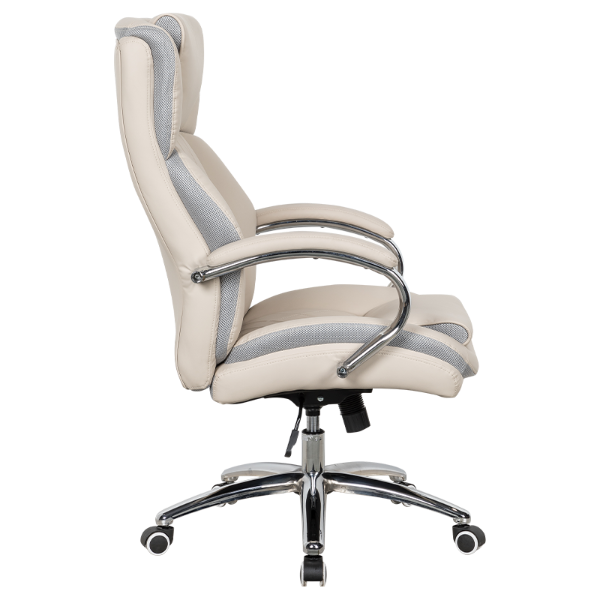
Breathable Materials Improve Long-Term Comfort
Heat retention affects focus and sitting endurance. Breathable materials improve airflow and temperature regulation during long work sessions.
Look for:
- Mesh back panels for ventilation
- High-density foam seat cushions
- Durable fabric with moisture resistance
Balanced cushioning is ideal—too soft causes sinking, while overly firm seating creates pressure points.
Mobility and Stability Complete the Design
Smooth movement supports workflow efficiency while reducing unnecessary twisting and reaching.
- Stable five-point base
- Smooth rolling casters
- 360-degree swivel capability
- Strong structural support for daily use
A quality office chair combines freedom of movement with dependable balance and durability.
Final Thoughts
The right ergonomic office chair should offer full adjustability, targeted spinal support, breathable comfort, and flexible movement. These features work together to improve posture, reduce fatigue, and support productivity throughout the workday. Investing in ergonomics is not simply about comfort—it is about creating a healthier and more sustainable work environment.